
For many seniors, a home phone is still the easiest and most comfortable way to stay connected. The best option isn’t about “the newest tech” — it’s about clarity, reliability, and simple support.
What matters most for seniors
- Clear audio (no muffled calls)
- Easy setup (standard handset preferred)
- Dependable emergency calling (911/E911)
- No complicated apps
- Helpful support when something needs changing
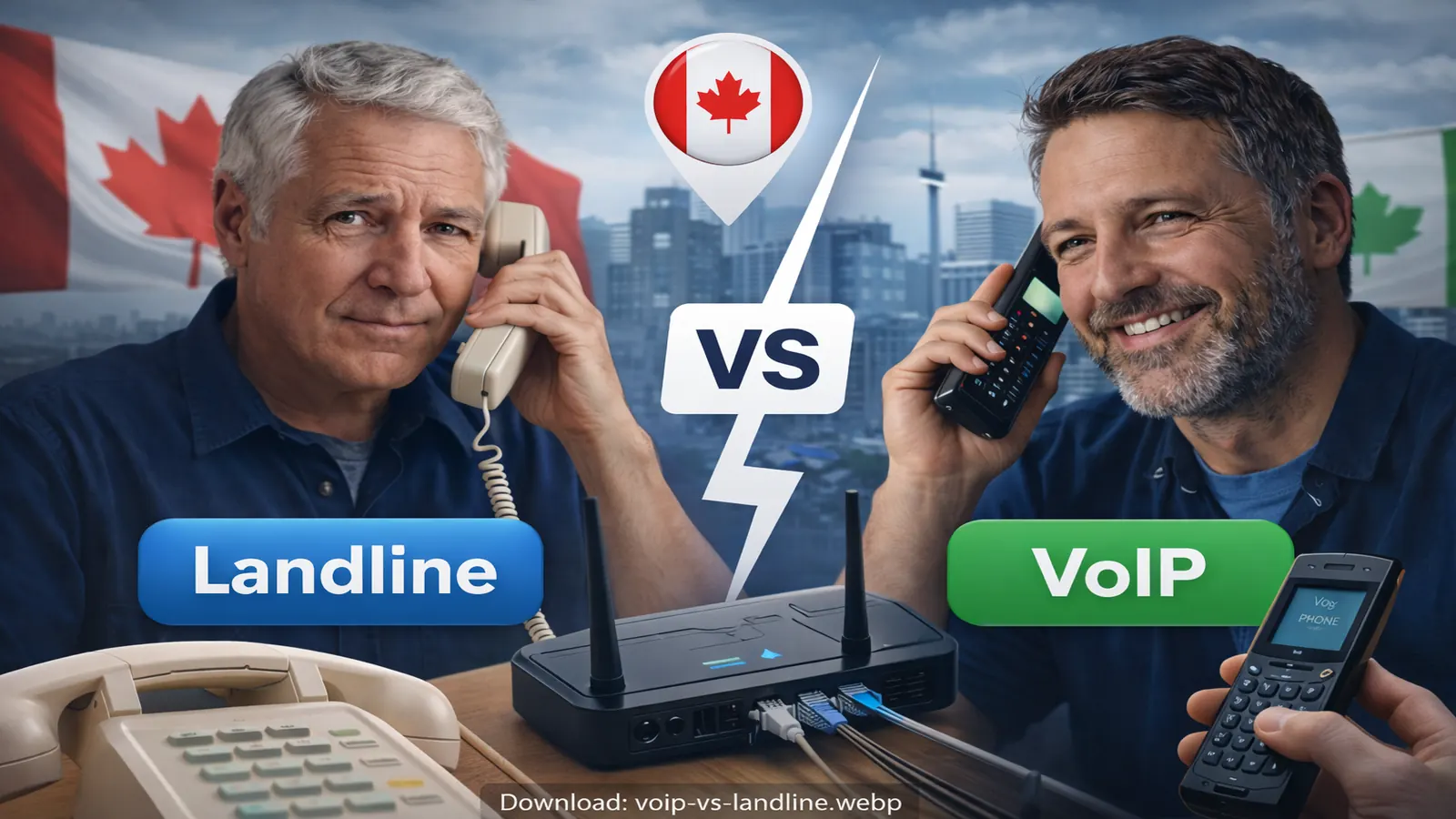
Landline vs VoIP for seniors
Both can work. The biggest difference is that VoIP uses your internet connection. If your internet is stable, VoIP can be a great value with extra features.
Tip for reliability
If you choose VoIP, use a small UPS battery backup for the modem/router. This keeps the phone working during short power cuts.
Best setup: keep the phone they already like
The simplest approach is to keep the same type of phone handset and use a small adapter (ATA) behind the scenes. Seniors can continue using their normal phone — answering and dialing the same way.
Helpful features to look for
- Voicemail-to-email for family support (optional)
- Call forwarding to a mobile if needed
- Call blocking / spam controls
- Easy number porting (keep the same number)
What to avoid
- Complicated multi-app setups
- Providers with weak customer support
- Unclear emergency calling policies
Next step
If you want a senior-friendly home phone in Canada, focus on simplicity and support first — then choose the plan that fits how often they call Canada/US.