
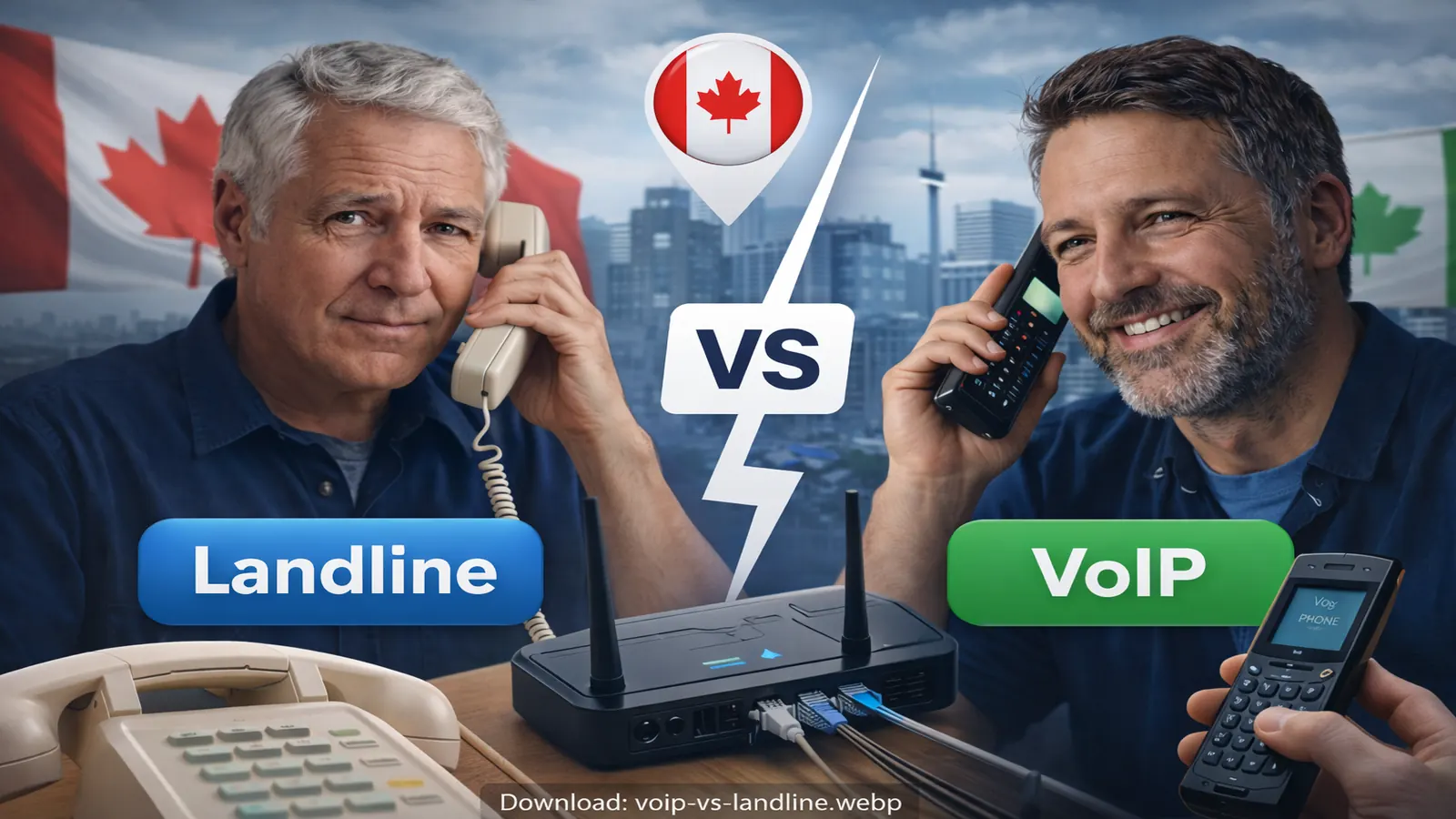
If you’re shopping for a home phone in Canada, you’ll run into two options: traditional landline and VoIP (Voice over Internet Protocol). Both can work well — but the best choice depends on your home, internet, and how you use your phone.
What’s the difference?
- Landline: Your phone runs over copper lines (or a cable-based “home phone” service). It usually keeps working during internet outages.
- VoIP: Your phone calls travel over your internet connection. You can use a standard phone with a small adapter (ATA) or an IP phone.
Cost comparison
In most Canadian cities, VoIP plans are typically cheaper than legacy landline plans. You also tend to get more features included (like call forwarding, voicemail-to-email, and number porting support) without extra add‑on charges.
Reliability and power outages
Traditional landlines often have an advantage during power outages because the line may carry its own power. VoIP depends on:
- Your internet connection
- Your modem/router power
- Your phone adapter power
Modern fix: a small UPS (battery backup) for your modem/router keeps VoIP running during short outages.
911 / E911 in Canada
Landlines are typically tied to your address automatically. With VoIP, you must ensure your service address is accurate so emergency services can locate you (often called E911).
If you move, remember to update the address in your account.
Call quality
VoIP call quality can be excellent — sometimes better than landline — when your network is clean. The most common issues come from:
- Wi‑Fi congestion
- Low upload speed
- Busy home networks (video calls, streaming)
Using Ethernet for your adapter and enabling router QoS can help a lot.
Who should choose VoIP?
- You want a simple home phone at a better monthly price
- You want features like call forwarding, voicemail-to-email, spam call controls
- You want easy number porting and flexible setup
Who should choose landline?
- You’re in a location with unstable internet
- You rely on the phone during extended power outages without backup
- You need the simplest “plug and forget” experience and don’t want any internet dependency
Next step
If you’re leaning toward VoIP, the easiest path is: confirm internet stability, plan your number port, and choose a provider that supports Canadian calling and emergency services properly.